
I was once asked if change detection in Angular is depth or breadth first. This basically means whether Angular first checks siblings of the current component (breadth-first) or its children (depth-first). I hadn’t given any prior thought to this question so I just went with my gut and the knowledge of internals. I declared that it was depth-first. Later, to check my assertion, I created a tree of components and put some logging logic inside the ngDoCheck hook:
@Component({
    selector: 'r-comp',
    template: `{{addRender()}}`
})
export class RComponent {
    ngDoCheck() {
        // holds all calls in order and is logged to console
        calls.ngDoCheck.push('R');
    }
And to my surprise, it turned out that some siblings were checked first as depicted on the diagram below:
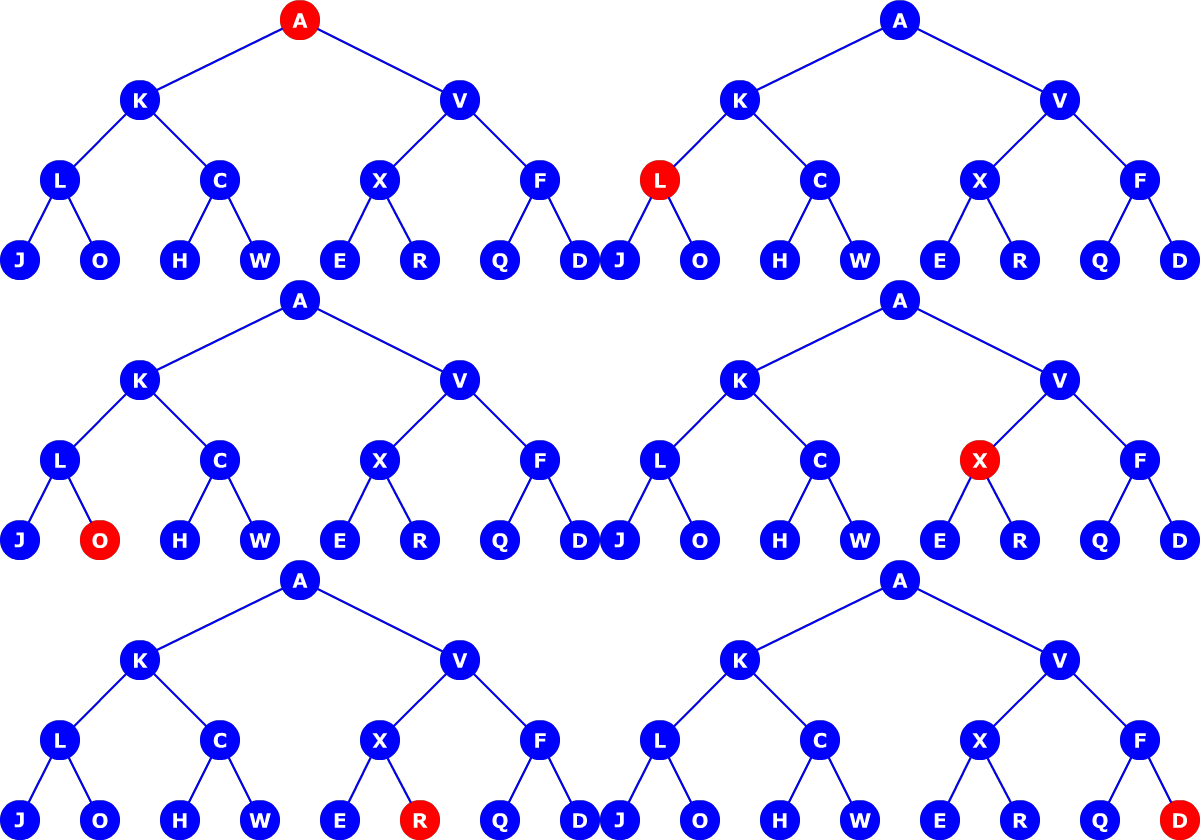
So here you see that Angular checks K and then V, L and then C and so on. So was I wrong and it’s really a breadth-first algorithm? Well, not exactly. First thing to notice in the above representation is that it’s not a proper breadth-first algorithm. The conventional implementation of the algorithm checks all siblings on the same level, whereas in the diagram above as you can see the algorithm indeed checks L and C sibling components, but instead of checking X and F it goes down to J and O. Also, the implementation of the breadth-first graph traversal algorithm is well defined but I couldn’t find it in the sources. So I decided to run another experiment and put a logging logic in a custom function called when change detection evaluates expressions:
@Component({
    selector: 'r-comp',
    template: `{{addRender()}}`
})
export class RComponent {
    addRender() {
        calls.render.push('R');
    }
}
And this time I got different results:
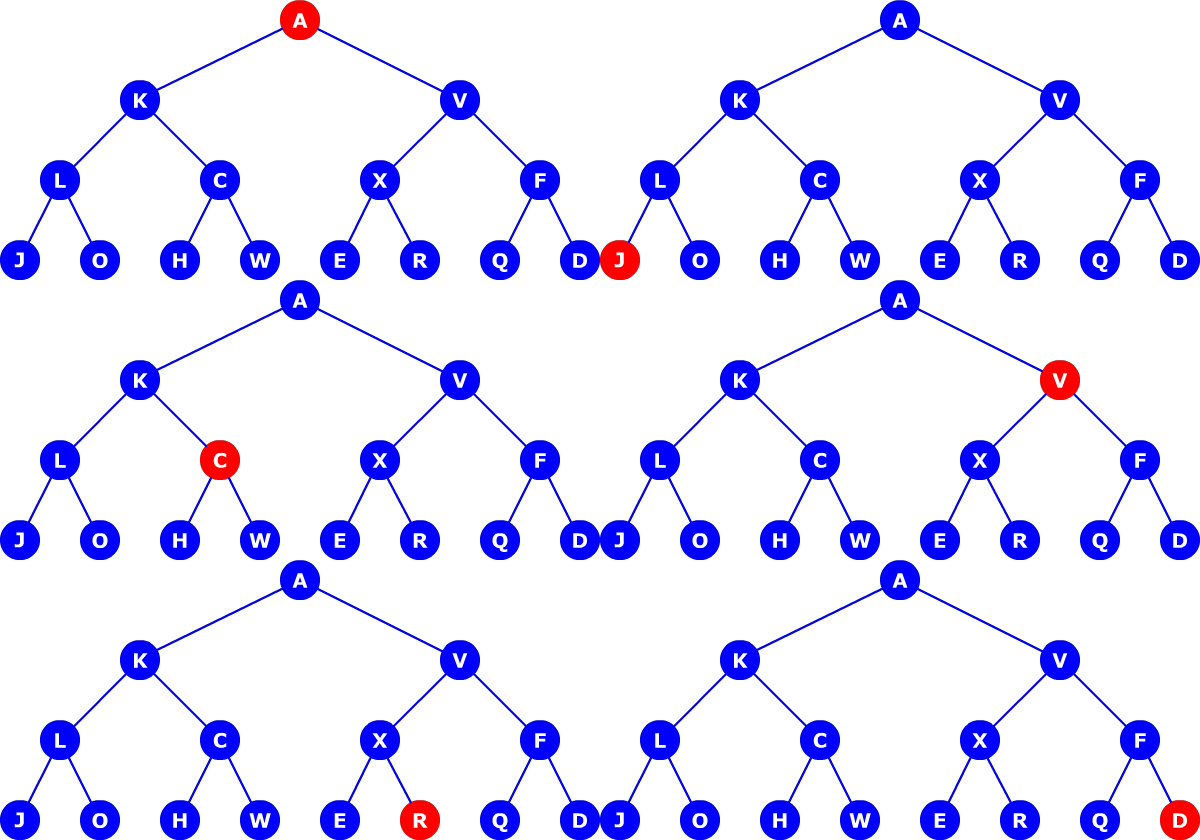
It’s a proper depth-first graph traversal algorithm. So what’s going on here? It’s actually pretty simple, let me explain.
Change detection operations
To understand the difference in behavior we need to take a look at the operations performed by change detection mechanism when checking a component. If you’ve read my other articles on change detection you probably know that the key operations performed by change detection are the following:
- update child components properties
- call
NgOnChangesandNgDoChecklifecycle hooks on child components - update DOM on the current component
- run change detection for child components
I highlighted one interesting specifics above — when Angular checks the current component it calls lifecycle hooks on child components, but renders DOM for the current component. And that’s a very important distinction. This is precisely the reason that makes it seem as if the algorithm runs breadth-first if we put logging into NgDoCheck hook. When Angular checks a current component it calls lifecycle hooks for all its child components which are siblings. Suppose Angular checks K component now and calls NgDoCheck lifecycle hook on L and C. So, we get the following:
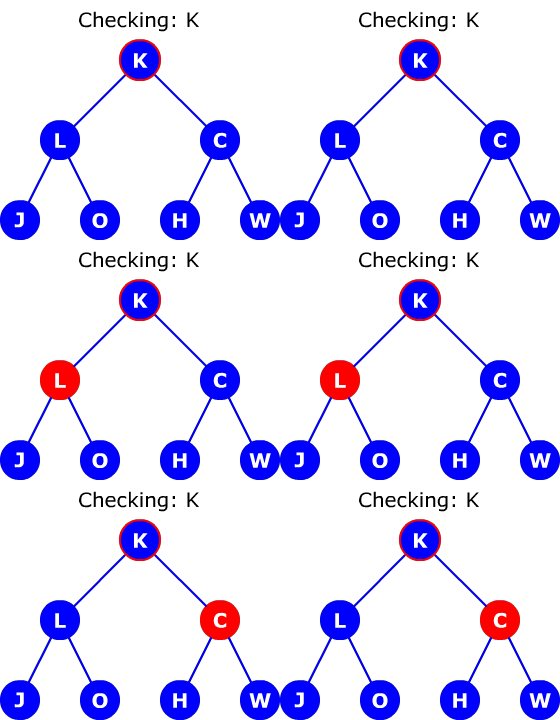
Looks like breadth-first algorithm. However, remember that Angular still in the process of checking K component. So after completing all operations for the K component it doesn’t proceed to checking the sibling V component, as it would with the breadth-first implementation. Instead, it goes on to check L component, which is a child of K. This is the depth-first implementation of change detection algorithm. And as we now know it will call ngDoCheck on J and O components and this is exactly what happens:
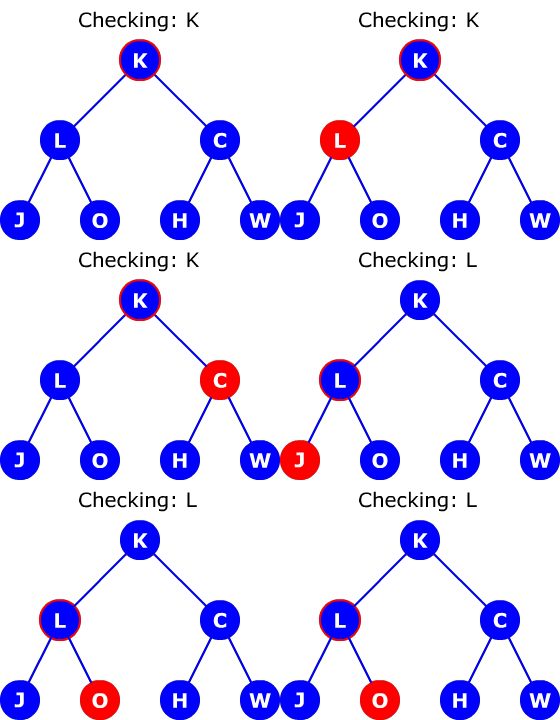
So, after all, my gut didn’t let me down. Change detection mechanism is implemented as depth-first internally, but involves calling ngDoCheck lifecycle hooks on sibling components first. By the way, I already described this logic in depth in the If you think ngDoCheck means your component is being checked — read this article.
Stackblitz demo
Here you can see the demo with logging logic in different places.